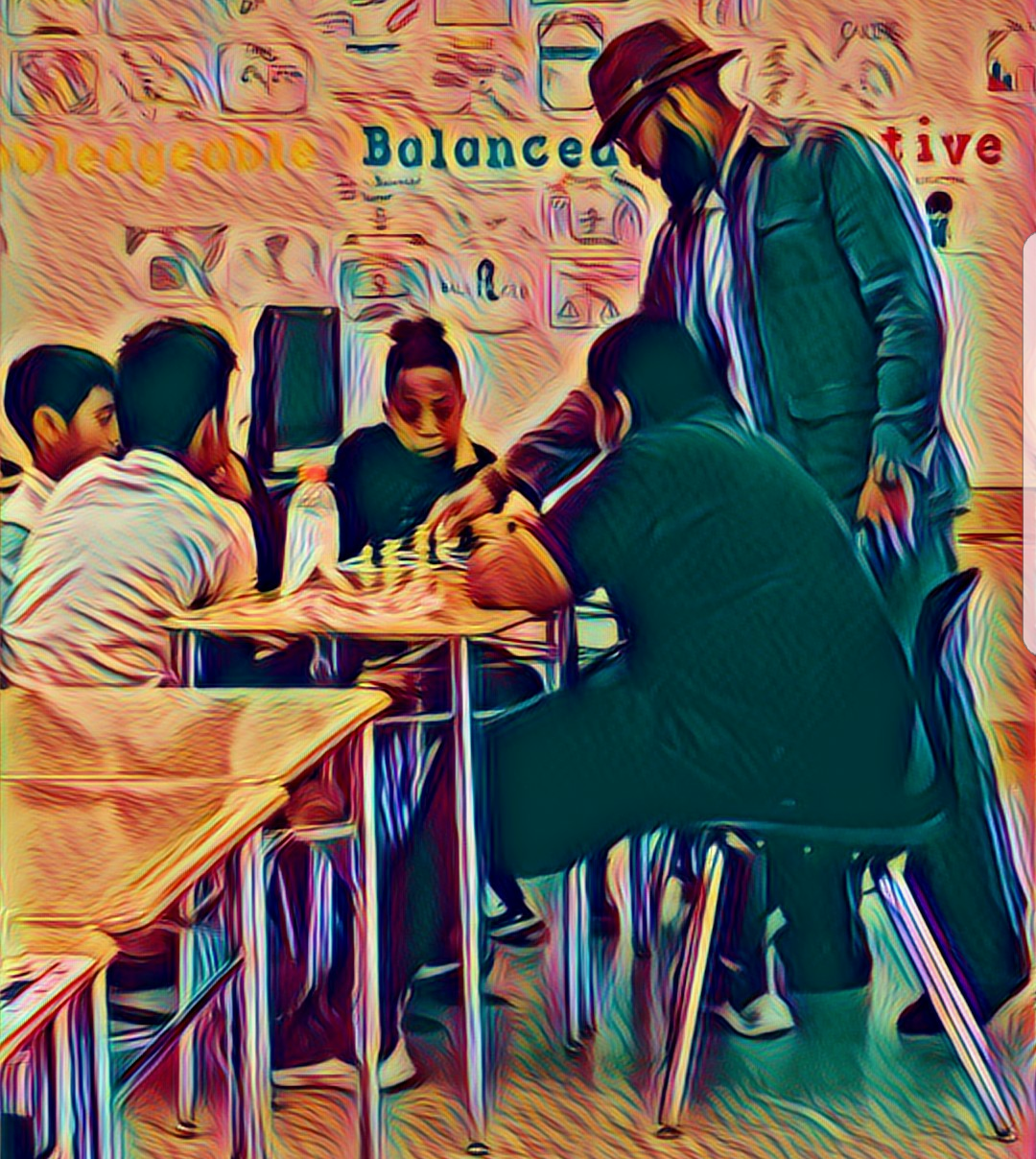
Over two decades of teaching scholastic chess, I've watched brilliant students make silly blunders simply because anxiety got the best of them. When your brain perceives pressure, it triggers a rush of adrenaline. If you don't know how to channel it, that adrenaline makes you rush your moves, panic on the clock, or miss simple tactical threats.
Here are the exact mindset strategies and physical techniques I teach my students to stay cool, calm, and dangerous at the board.
🫁 1. The "3-Second Box Reset" at the Board
When you feel a wave of anxiety hit during a game—especially when your clock is running down or your opponent plays an unexpected move—stop everything for 3 seconds.
- Step 1: Take a Slow Inhale: Breathe in deeply through your nose for 3 seconds.
- Step 2: Pause: Hold your breath for 3 seconds while dropping your shoulders away from your ears.
- Step 3: Exhale Slowly: Blow the air out through your mouth like you're blowing out a candle.
This simple physical reset lowers your heart rate, relaxes muscle tension, and signals to your brain that you are in total control of the position.
💡 Coach's Tip: Sit Back & Hands Off the Board
When you feel panicked, your instinct is to lean forward and hover your hands over the pieces. Don't do it! Sit back, fold your hands in your lap, take your breath, and look at the whole board before touching anything.
🧠 2. Reframing "Nervousness" as "Preparation"
Words matter. When you tell yourself "I'm nervous," your brain reacts with fear. Instead, train yourself to say: "My mind and body are getting ready to focus."
Adrenaline isn't your enemy—it's your body's natural fuel designed to sharpen your eyesight and speed up your calculation. Embrace the feeling as a sign that you care about your game and you're ready to perform.
🛡️ 3. What to Do Immediately After a Blunder
Every chess player blunders. World Champions blunder. The secret to tournament success isn't never making a mistake—it's how quickly you recover after one.
- Apply the 10-Second Rule: The moment a piece is lost or a blunder occurs, allow yourself 10 seconds to feel disappointed. Then, let it go completely. That move belongs to the past now.
- Focus on the Current Board: The only position that matters is the 64 squares in front of you right now. Ask yourself: "What is my opponent trying to do, and how can I make this as difficult for them as possible?"
- Never Resign Early: In scholastic tournaments, games are wild! Opponents make mistakes all the time when they think they're winning. Force them to prove they can checkmate you.
🚶 4. Build a Consistent Pre-Game Warmup Routine
Top athletes don't just step onto the court out of nowhere—they have a pre-game routine. You should too!
- 15 Minutes Before Round Start: Step away from electronic screens, social media, and heavy analysis.
- 10 Minutes Before: Take a short 2-minute walk outside the playing room, stretch your arms, drink a glass of water, and head to the restroom.
- 5 Minutes Before: Walk to your board quietly, sit down, set your name card, and take 3 deep breaths before White's clock starts.
♟️ Coach Nebiu's Final Thought
"Pressure is a privilege. It means you care, you've put in the work, and you're stepping up to challenge yourself. Embrace the challenge, trust your training, and play with confidence!"